A granny old hag with very ugly face with an intentionally unattractive appearance is positioned on a bed on all fours, supporting herself on her knees and hands. She is viewed from a rear three-quarter angle, so both her back and side profile are visible. Her enormous frame dominates the scene, with broad shoulders, a very large torso, thick arms and legs, and a chubby, silhouette. She has an unkempt appearance, messy hair, tired facial features, and a generally disheveled look. with evil eyes and smile. Her posture causes the mattress to visibly compress beneath her weight. The scene is realistic and grounded, with natural proportions for an exceptionally granny ugly hag ,ordinary bedroom lighting, and detailed fabric and skin textures. The camera is positioned slightly behind and to the side, clearly showing her full figure,her long feet,her pussy,sagged big breast and the way she supports her weight on her knees and hands.Looking at me with evil eyes and smile,totally nude.

Related AI Porn

Ginger hair pigtails massive ass petite open legs look at camera head to toe picture front on to camera realistic smile at camera massive sexy hot
Ginger hair pigtails massive ass petite open legs look at camera head to toe picture front on to camera realistic smile at camera massive dildo next to her
tsunade from naruto
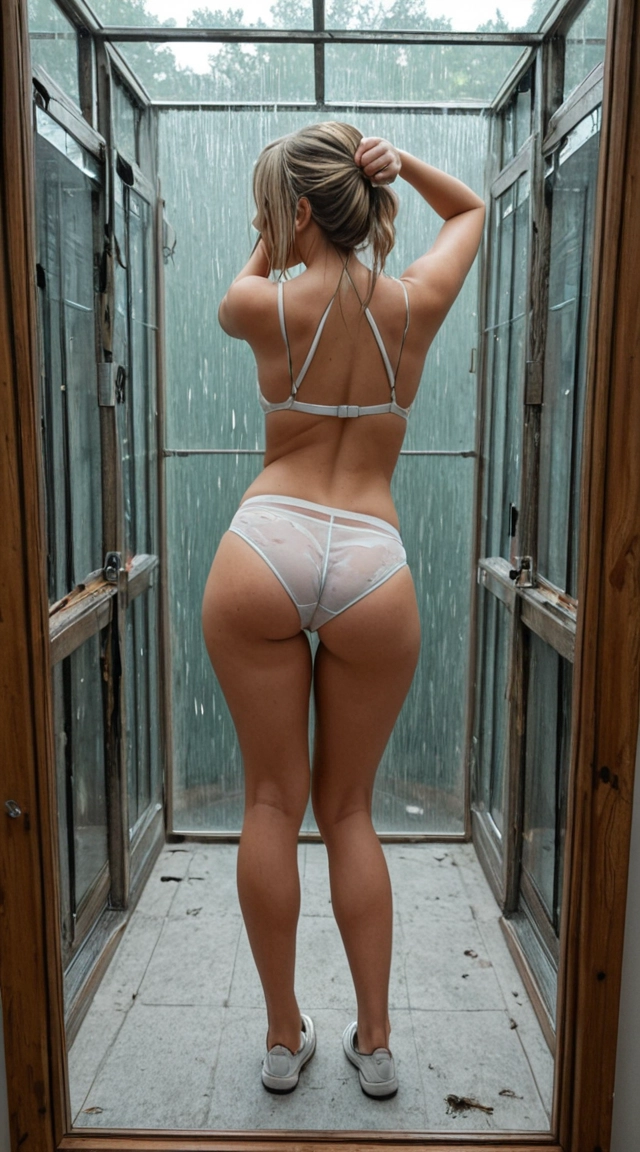
Render the image as an ultra-realistic live-action photograph, indistinguishable from a real on-location candid photograph of a costumed actress. The result must look like genuine photography rather than digital art: not concept art, not a painting, not CGI, not a 3D render, and not a stylized illustration. Prioritize photographic realism over stylization or glamour. Show natural skin texture, pores, subtle imperfections, realistic wet hair, physically believable fabric, and true optical depth of field. Use real-camera behavior, natural lens compression, slight handheld imperfections, mild focus falloff, and realistic exposure behavior.
Clearly an adult woman, rendered as an ultra-realistic live-action photograph of a real actress in costume. Preserve the character’s canonical facial features, hairstyle, hair color, eyes, overall temperament, signature colors, accessories, weapons, and recognizable costume design language. The image must look indistinguishable from a real candid on-location photograph, not concept art, not a painting, not CGI, and not a stylized illustration.
Tall, elongated feminine proportions with a near 9-head-tall figure; long legs, a very slim waist, full bust and hips, and mature, voluptuous feminine curves. Soft and distinctly feminine body lines, curvy but not overweight, not muscular, not bulky, and not stocky.
Preserve the identity, colors, materials, seams, trims, construction details, and recognizable design elements of the original costume. Both the upper and lower garments are in an extremely severe battle-damaged state, but the damage should be strongly asymmetrical rather than evenly distributed. One side of the body should remain relatively more intact, preserving the original silhouette, costume landmarks, and character recognition, while the opposite side has undergone near-total structural failure. Large contiguous sections of fabric or armor on the damaged side are missing or torn away, seams are split, edges are ruptured, panels are displaced, and hanging fragments remain attached in irregular strips. The upper garment should read as partially surviving on one side and catastrophically opened or destroyed on the other; the lower garment should similarly preserve more structure on one hip and leg while exposing much more of the opposite hip and thigh through large missing sections. This asymmetry should create strong visual tension and a clearer view of the body while still retaining enough recognizable costume elements to preserve the character’s identity. Favor large asymmetrical missing sections and uneven structural failure over evenly distributed distressing.
The scene takes place in heavy rain and powerful gusting wind. The weather must materially affect the damaged costume rather than merely the character’s hair: loose torn panels, shredded hems, detached straps, split skirt sections and hanging fragments are actively blown outward and away from the body, exposing the underlying silhouette instead of falling back across it. Large missing sections should remain visibly missing rather than being replaced by newly invented fabric or underlayers. Rain saturates the surviving material so it darkens, clings closely to the body and loses volume; thin surviving fabric and mesh may become mildly translucent when soaked, while thicker leather, armor and structured materials remain opaque. Water weight should pull damaged seams downward and stretch torn openings wider. Wind, rain and motion should continuously separate loose fabric from the torso, hips and legs, creating clear negative space between the body and the remaining garment fragments.
Photorealistic live-action photography, realistic natural skin texture, individually defined hair strands, physically believable fabric behavior, anatomically natural body proportions, and realistic natural hands. Bright HDR lighting, clearly visible face, full-body framing, dynamic transitional movement, strong character recognition, a distinctly feminine silhouette, extremely severe battle damage across both upper and lower garments, and high visual impact.
Use a spontaneous, incidental candid-photography aesthetic in a realistic public or semi-public environment. The camera observes the character from a partially concealed position, such as from behind a doorway, pillar, shelf, railing, glass panel, vehicle frame, architectural structure, or another foreground obstruction. Allow foreground objects to naturally obscure approximately 15%–35% of the frame.
Use off-center and intentionally imperfect composition, with subtle camera tilt, irregular framing, shallow depth of field, blurred foreground elements, and occasional slight motion blur or exposure imperfections.
For distant observation, use an 85–200mm telephoto lens to create natural spatial compression and an observational candid-photography feeling. For closer distances, use a 24–50mm environmental snapshot perspective, resembling an spontaneous smartphone or handheld-camera photograph.
Capture the character naturally in the middle of an action rather than posing formally for the camera. Possible actions include walking, turning, adjusting her hair or clothing, scanning the surrounding environment, leaning against an object, reaching for or picking up something, handling equipment, moving cautiously through the environment, or suddenly turning her head toward the camera.
Realistic public or semi-public location, natural environmental lighting, physically believable reflections, spontaneous handheld snapshot feeling, observational telephoto photography, foreground obstruction, partial visual occlusion, imperfect composition, realistic environmental depth, and cinematic photographic realism.
Do not use a rear-view or back-facing camera angle.
Native ultra-high-resolution 4K photographic output. Resolve genuine micro-detail rather than upscaled softness: visible skin pores, individual eyelashes, separate wet hair strands, textile weave, stitching, torn fibers, leather grain, metal scratches and individual rain droplets. The subject’s face and body must be optically sharp at the focal plane, with softness occurring only from natural lens depth of field and motion, never from low-resolution rendering or painterly smoothing.
tsunade from naruto
Render the image as an ultra-realistic live-action photograph, indistinguishable from a real on-location candid photograph of a costumed actress. The result must look like genuine photography rather than digital art: not concept art, not a painting, not CGI, not a 3D render, and not a stylized illustration. Prioritize photographic realism over stylization or glamour. Show natural skin texture, pores, subtle imperfections, realistic wet hair, physically believable fabric, and true optical depth of field. Use real-camera behavior, natural lens compression, slight handheld imperfections, mild focus falloff, and realistic exposure behavior.
Clearly an adult woman, rendered as an ultra-realistic live-action photograph of a real actress in costume. Preserve the character’s canonical facial features, hairstyle, hair color, eyes, overall temperament, signature colors, accessories, weapons, and recognizable costume design language. The image must look indistinguishable from a real candid on-location photograph, not concept art, not a painting, not CGI, and not a stylized illustration.
Tall, elongated feminine proportions with a near 9-head-tall figure; long legs, a very slim waist, full bust and hips, and mature, voluptuous feminine curves. Soft and distinctly feminine body lines, curvy but not overweight, not muscular, not bulky, and not stocky.
Preserve the identity, colors, materials, seams, trims, construction details, and recognizable design elements of the original costume. Both the upper and lower garments are in an extremely severe battle-damaged state, but the damage should be strongly asymmetrical rather than evenly distributed. One side of the body should remain relatively more intact, preserving the original silhouette, costume landmarks, and character recognition, while the opposite side has undergone near-total structural failure. Large contiguous sections of fabric or armor on the damaged side are missing or torn away, seams are split, edges are ruptured, panels are displaced, and hanging fragments remain attached in irregular strips. The upper garment should read as partially surviving on one side and catastrophically opened or destroyed on the other; the lower garment should similarly preserve more structure on one hip and leg while exposing much more of the opposite hip and thigh through large missing sections. This asymmetry should create strong visual tension and a clearer view of the body while still retaining enough recognizable costume elements to preserve the character’s identity. Favor large asymmetrical missing sections and uneven structural failure over evenly distributed distressing.
The scene takes place in heavy rain and powerful gusting wind. The weather must materially affect the damaged costume rather than merely the character’s hair: loose torn panels, shredded hems, detached straps, split skirt sections and hanging fragments are actively blown outward and away from the body, exposing the underlying silhouette instead of falling back across it. Large missing sections should remain visibly missing rather than being replaced by newly invented fabric or underlayers. Rain saturates the surviving material so it darkens, clings closely to the body and loses volume; thin surviving fabric and mesh may become mildly translucent when soaked, while thicker leather, armor and structured materials remain opaque. Water weight should pull damaged seams downward and stretch torn openings wider. Wind, rain and motion should continuously separate loose fabric from the torso, hips and legs, creating clear negative space between the body and the remaining garment fragments.
Photorealistic live-action photography, realistic natural skin texture, individually defined hair strands, physically believable fabric behavior, anatomically natural body proportions, and realistic natural hands. Bright HDR lighting, clearly visible face, full-body framing, dynamic transitional movement, strong character recognition, a distinctly feminine silhouette, extremely severe battle damage across both upper and lower garments, and high visual impact.
Use a spontaneous, incidental candid-photography aesthetic in a realistic public or semi-public environment. The camera observes the character from a partially concealed position, such as from behind a doorway, pillar, shelf, railing, glass panel, vehicle frame, architectural structure, or another foreground obstruction. Allow foreground objects to naturally obscure approximately 15%–35% of the frame.
Use off-center and intentionally imperfect composition, with subtle camera tilt, irregular framing, shallow depth of field, blurred foreground elements, and occasional slight motion blur or exposure imperfections.
For distant observation, use an 85–200mm telephoto lens to create natural spatial compression and an observational candid-photography feeling. For closer distances, use a 24–50mm environmental snapshot perspective, resembling an spontaneous smartphone or handheld-camera photograph.
Capture the character naturally in the middle of an action rather than posing formally for the camera. Possible actions include walking, turning, adjusting her hair or clothing, scanning the surrounding environment, leaning against an object, reaching for or picking up something, handling equipment, moving cautiously through the environment, or suddenly turning her head toward the camera.
Realistic public or semi-public location, natural environmental lighting, physically believable reflections, spontaneous handheld snapshot feeling, observational telephoto photography, foreground obstruction, partial visual occlusion, imperfect composition, realistic environmental depth, and cinematic photographic realism.
Do not use a rear-view or back-facing camera angle.
Native ultra-high-resolution 4K photographic output. Resolve genuine micro-detail rather than upscaled softness: visible skin pores, individual eyelashes, separate wet hair strands, textile weave, stitching, torn fibers, leather grain, metal scratches and individual rain droplets. The subject’s face and body must be optically sharp at the focal plane, with softness occurring only from natural lens depth of field and motion, never from low-resolution rendering or painterly smoothing.
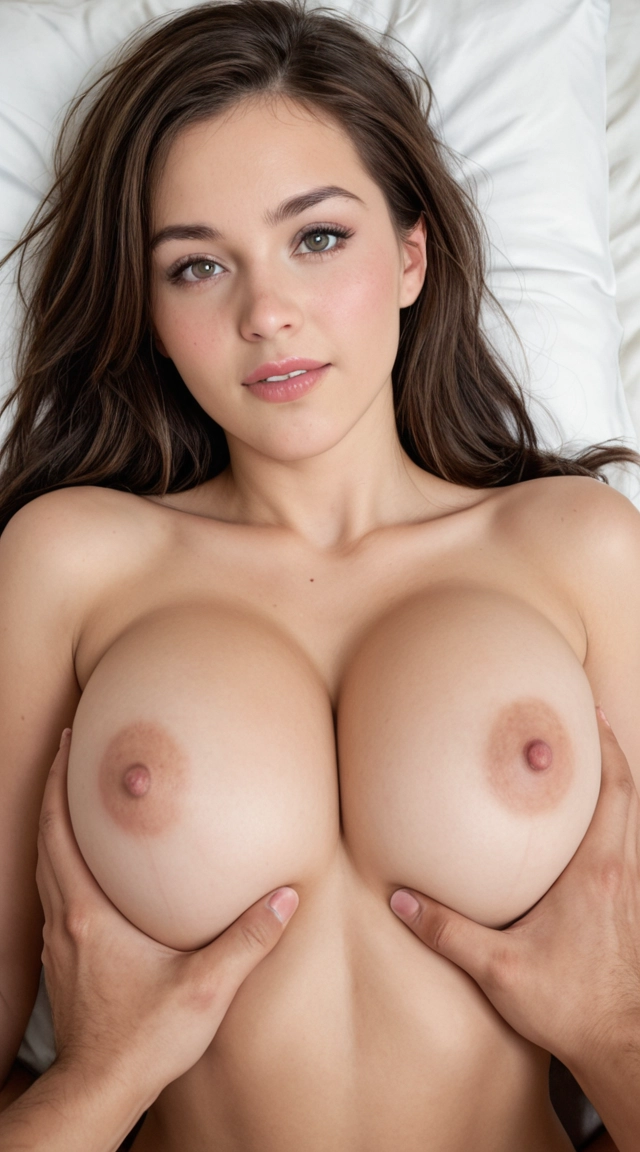
close up scene of a nude woman with large sexy breasts getting a sensual breast massage from her boyfriend.  He uses both hands to fondle and tease her soft natural breasts, feeling the aerolas and nipples and soft breast tissue with both hands